
 You can install Lutris on Ubuntu using the sandboxed Flatpak package from Flathub, the native APT package from the official Multiverse software index, or by downloading the official DEB package directly from GitHub.
Lutris is a free, open-source game manager designed specifically for Linux. Acting as a unified launcher, Lutris merges game libraries from GOG, Steam, Epic Games Store, and Humble Bundle into a single desktop screen.
It automatically configures game folders (called Wine prefixes that act as virtual Windows C: drives) and emulator runners, allowing you to play Windows games on Linux with minimal setup.
Note that the previously popular official Lutris Launchpad PPA is now defunct and deprecated. If you attempt to add it on modern Ubuntu versions, your package manager will output a 404 error during system updates.
This guide provides step-by-step terminal instructions for installing Lutris on Ubuntu 26.04, 24.04, and 22.04 LTS using currently active installation paths, setting up required 32-bit Vulkan drivers, and performing clean uninstallation.
If you run into issues during the configuration, please leave a comment below or contact us for personalized assistance.
Flatpak, APT & Manual DEB Setup Guides
Configure the Lutris gaming manager on your computer. Learn how to purge the defunct PPA, install via sandboxed container or native package managers, and setup Vulkan libraries for Windows compatibility.
Choosing the correct installation format affects how frequently Lutris receives client updates and how it interacts with system libraries. Flatpak isolates the application and includes direct updates from upstream developers, making it highly recommended. Native APT installs require manual setup of Wine runners and libraries. Review the comparison grid below to select the option that best fits your gaming setup.
Lutris Installation Methods Compared
Evaluate update frequencies, dependency isolation levels, and storage access options across the available installation methods.
| Method | Source channel | Update Frequency | Sandbox isolation | Pros & Cons |
|---|---|---|---|---|
| Flatpak (Flathub) | Flathub Registry | Immediate (Upstream) | Strict sandbox restriction | Bridges runtime libraries automatically. Custom drives require directory override commands. |
| APT Multiverse (Packages) | Ubuntu Repositories | Frozen at release time | None (Native system access) | Full host disk access. Version might track older releases (e.g. v0.5.14). |
| GitHub DEB (Releases) | Official GitHub Release | Manual (On-demand) | None (Native system access) | Provides native installation with latest upstream binary. Requires manual download and dependency resolution. |
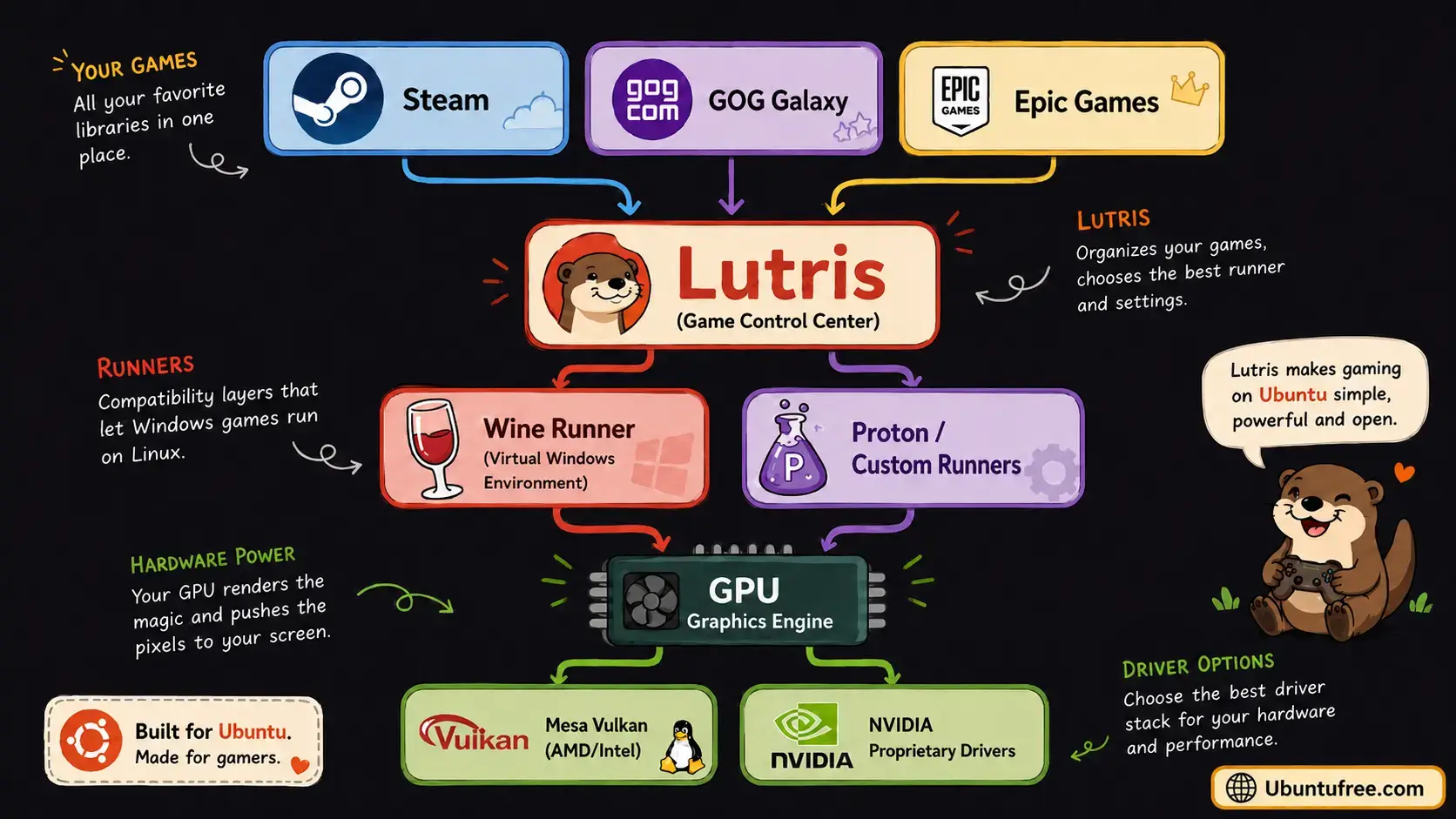
Lutris Integration & Runtime Architecture
To visualize how the Lutris application runs, manages runner scripts, and calls system drivers on your computer, review the flowchart layout below:
Prerequisite: Clean Up the Defunct Lutris PPA
The official Lutris Launchpad PPA (ppa:lutris-team/lutris) was retired by the developers and is no longer updated or active. Leaving it in your system software sources will throw a 404 error and interrupt packages updating during your daily terminal maintenance. Before configuring Lutris, execute these commands to clean up your lists:
Open your terminal and execute the following commands to safely remove the PPA repository references and reload package lists:
sudo add-apt-repository --remove ppa:lutris-team/lutris -y
sudo apt update
Note: If the `add-apt-repository` command fails or hangs, you can manually delete the target file by running `sudo rm -f /etc/apt/sources.list.d/lutris-team-ubuntu-lutris-*.list` followed by `sudo apt update`.
Method 1: Install Lutris via Flatpak (Flathub)
Flatpak is the developer-recommended method for running Lutris on Ubuntu desktop configurations. Because Flatpak runtimes execute in a sandboxed container, the package bundles all required dependencies (such as Python wrappers and interface themes) internally. This prevents dependency conflicts with your host system software and ensures you receive the latest upstream version updates directly from Flathub.
If you have not set up Flatpak on your desktop, run this command to install the manager components:
sudo apt update && sudo apt install flatpak -y
Register the Flathub server to enable package search and installation downloads:
flatpak remote-add --if-not-exists flathub https://flathub.org/repo/flathub.flatpakrepo
Execute the installer package request to download and build the Lutris sandbox runtime container:
flatpak install flathub net.lutris.Lutris -y
Note: You must log out of your desktop session and log back in to refresh your applications list so the launcher icon shows up in your menu. Alternatively, you can run Lutris immediately from the terminal using: `flatpak run net.lutris.Lutris`.
By default, the sandboxed container cannot read folders outside your standard home folder paths. If you store game files on a second SSD or custom mount partition, grant Lutris write access to it by running this command (replacing `/mnt/games` with your actual mount path):
flatpak override --user --filesystem=/mnt/games net.lutris.Lutris
Method 2: Install Lutris via Official Ubuntu Repositories (APT)
If you prefer native execution and full integration with your desktop environments, you can install the Lutris package distributed directly through the official Ubuntu package repository. Because Lutris is classified as open-source software but manages proprietary game software dependencies, it resides in the Multiverse software archive. Native packages read system libraries directly and operate with full disk access without container limitations.
Ensure both the Universe (community-maintained open-source) and Multiverse (restricted packages) repositories are active on your system:
sudo add-apt-repository universe -y
sudo add-apt-repository multiverse -y
Update your APT repository indexes to fetch the newly enabled package details:
sudo apt update
Install Lutris and its core gaming libraries:
sudo apt install lutris -y
Note: The package frozen inside the stable repositories might be slightly older (e.g. v0.5.14) due to Ubuntu repository freeze policies. If you require features introduced in the latest v0.5.22 release, use the Flatpak method or the manual DEB installation path below.
Method 3: Install Lutris Natively via the Official DEB Package
If you prefer a native installation without Flatpak sandbox limitations but need the absolute latest release features, you can download the official .deb package compiled directly by the Lutris developers on GitHub. This method bypasses the frozen Ubuntu repositories and provides a direct, native version.
Visit the official Lutris GitHub Releases portal, or use `wget` to pull the latest v0.5.22 installer directly to your system’s download folder:
cd ~/Downloads
wget https://github.com/lutris/lutris/releases/download/v0.5.22/lutris_0.5.22_all.deb
Note: Check the GitHub releases page to verify if a newer build version is active before running the script commands.
Rather than using dpkg (which can cause missing library errors), install the downloaded `.deb` package using `apt`. This automatically fetches any required dependencies:
sudo apt update
sudo apt install ./lutris_0.5.22_all.deb -y
Critical Configuration: Enable Graphics Drivers & Wine Support
Lutris manages your game library, but it relies on Wine (to translate Windows software) and Vulkan (to handle gaming graphics) to run Windows games on Linux. Native installations (APT and DEB methods) require you to install these components manually to avoid game crashes. Run these commands to set up your system graphics and compatibility packages:
Because many Windows game launchers and older game files are 32-bit, you must enable 32-bit package downloads on your Ubuntu system:
sudo dpkg --add-architecture i386
sudo apt update
If your computer uses AMD Radeon or Intel graphics, install the open-source Mesa Vulkan library stacks (including both 64-bit and 32-bit versions):
sudo apt install mesa-vulkan-drivers mesa-vulkan-drivers:i386 libvulkan1 libvulkan1:i386 -y
If you use an NVIDIA GPU, ensure your proprietary graphics drivers and relevant Vulkan libraries are correctly installed by running:
sudo apt install libglx-mesa0:i386 mesa-vulkan-drivers:i386 libgl1-mesa-dri:i386 -y
Note: The default NVIDIA drivers are best installed using the graphics GUI via **Software & Updates** > **Additional Drivers** tab, selecting the “tested proprietary” NVIDIA driver listing.
Lutris has a built-in manager to download specific Wine versions, but it requires standard system-wide Wine components to establish primary translation libraries. If you choose the APT or DEB methods, refer to our comprehensive Wine installation guide to configure WineHQ correctly on your machine before running game files.
Interface Screenshots
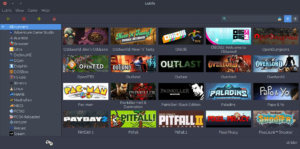
Below are screenshots of the Lutris gaming client interface running on an Ubuntu desktop, showcasing unified library layouts, emulator runner selection lists, and game configurations:
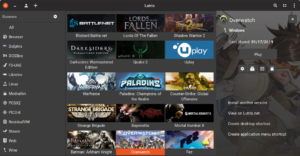
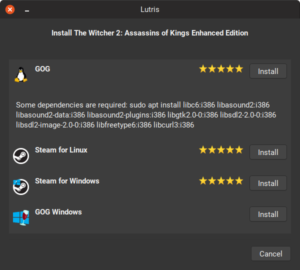
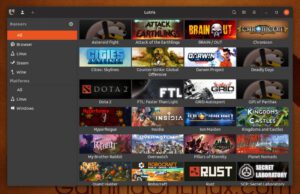

-
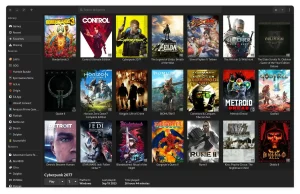
- Updated homepage lutris linux software from How to Install Lutris on Ubuntu 26.04 – Complete Guide
Video Tutorial: Install Lutris on Ubuntu
If you prefer a visual walkthrough, watch the following video demonstrating how to install Lutris and configure runners on Ubuntu:
How to Completely Uninstall Lutris & Clear Settings
If you wish to remove Lutris, select the commands below corresponding to your active installation format to purge system packages and delete local cache registries.
Remove the Lutris application packages from your desktop environment:
For Flatpak installations:
flatpak uninstall net.lutris.Lutris -y
flatpak uninstall --unused -y
For APT/DEB installations:
sudo apt remove lutris -y
sudo apt autoremove --purge -y
Uninstalling the client does not automatically delete your local cache databases or runners configurations to prevent accidental library deletions. If you wish to remove these files entirely, execute the following directory deletion commands:
# Clean native APT/DEB user caches
rm -rf ~/.config/lutris ~/.local/share/lutris ~/.cache/lutris

# Clean Flatpak application sandbox files
rm -rf ~/.var/app/net.lutris.Lutris
Use the links below to access official documentation portals and community forums for troubleshooting specific games:
Frequently Asked Questions
Find quick answers to common questions regarding Lutris dependencies and setup configurations on Linux.
Why did I receive a 404 error when attempting to add the Lutris PPA on Ubuntu 26.04?
The official Launchpad PPA (ppa:lutris-team/lutris) has been permanently retired and is no longer maintained. If you previously added it, remove it from your sources to avoid apt errors. You should install Lutris via Flatpak or the default Ubuntu multiverse repositories instead.
Is Lutris available in the default Ubuntu package repositories?
Yes, Lutris is available in the official Ubuntu Multiverse repository. You can install it natively using: sudo apt update && sudo apt install lutris -y. However, this version is frozen at release time and may be older than the upstream package.
What is the recommended way to install Lutris on Ubuntu for the latest features?
The official Lutris developers recommend installing Lutris via Flatpak from Flathub. This sandboxed version bundles all core dependencies (including Wine runners and Python modules) and receives automatic upstream updates directly.
Why do my Windows games fail to launch inside Lutris on Ubuntu?
Windows games running through Lutris require Wine and Vulkan graphics libraries to translate DirectX instructions. Ensure you have 32-bit architecture enabled (sudo dpkg --add-architecture i386) and have installed your appropriate Mesa (AMD/Intel) or proprietary NVIDIA Vulkan driver packages.
How do I grant Lutris Flatpak permission to access my external games drive?
Because the Flatpak version runs sandboxed, it cannot read custom storage partitions by default. You can grant filesystem access by executing the override command: flatpak override --user --filesystem=/path/to/your/drive net.lutris.Lutris.
Related gaming guides: Install Steam on Ubuntu · Install Steam Link on Ubuntu · Install Wine on Ubuntu · Install PlayOnLinux on Ubuntu