
 Some of the best audio editing tools on Ubuntu are Audacity, Ardour, LMMS, Ocenaudio, and Tenacity. Ubuntu gives you a wide choice of open source audio software. Whether you are editing a podcast, making music, mixing DJ sets, or writing sheet music, there is a reliable tool for the job.
This guide covers 15 applications split into three categories: simple audio editors for recording and podcasting, full music production apps, and specialist tools for notation, drums, live coding, and audio effects. All run natively on Ubuntu. Most are available through normal Ubuntu install methods, and the more advanced tools work with JACK and PipeWire when you need lower audio delay. These apps all work on the latest Ubuntu including 26.04 LTS.
🎧 Top Picks at a Glance
- Audacity: Best all-round audio editor for beginners and podcasters
- Ardour: Best studio-style app on Linux for serious recording and mixing
- LMMS: Best beginner tool for beats and electronic music
- MuseScore: Best notation and sheet music software on Ubuntu
- Tenacity: Best Audacity replacement if you want no data collection
- Sonic Pi: Best tool for live coding and performance audio
Start with Audacity if you record podcasts or voice. Start with LMMS if you want to make music. Both install in one command, work without extra audio setup, and have active communities. Once you outgrow them, the more advanced tools in this guide will make more sense.
🎤 Audio Editors
These tools are built for recording, trimming, cleaning, and exporting audio. They are the right starting point for podcasters, voiceover work, and anyone who needs to edit recorded audio without opening a full music production app.
Best For: Beginners, podcasters, voiceover recording, and quick audio cleanup
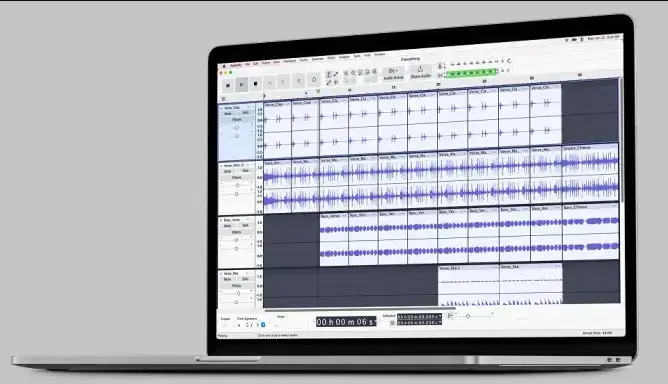
Why Choose It? Audacity has been the go-to audio editor on Linux for over two decades. It handles multi-track recording, noise reduction, detailed frequency editing, and file conversion in one app. It is easy to learn, and there is plenty of help available online.
- Noise reduction: Built-in noise profile tool works well on voice recordings
- Format support: Exports MP3, WAV, OGG, FLAC, and more via FFmpeg
- Effect add-ons: Works with LADSPA, LV2, Nyquist, and VST3 effects
- Frequency view: Helps identify and remove hum, hiss, and other noise
Quick Tip: Use Effect > Noise Reduction on a silent section of your recording first to build a noise profile, then apply it to the full track. This removes consistent background hum in seconds.
Install Command:
Best For: Privacy-conscious users who want Audacity’s features without data collection
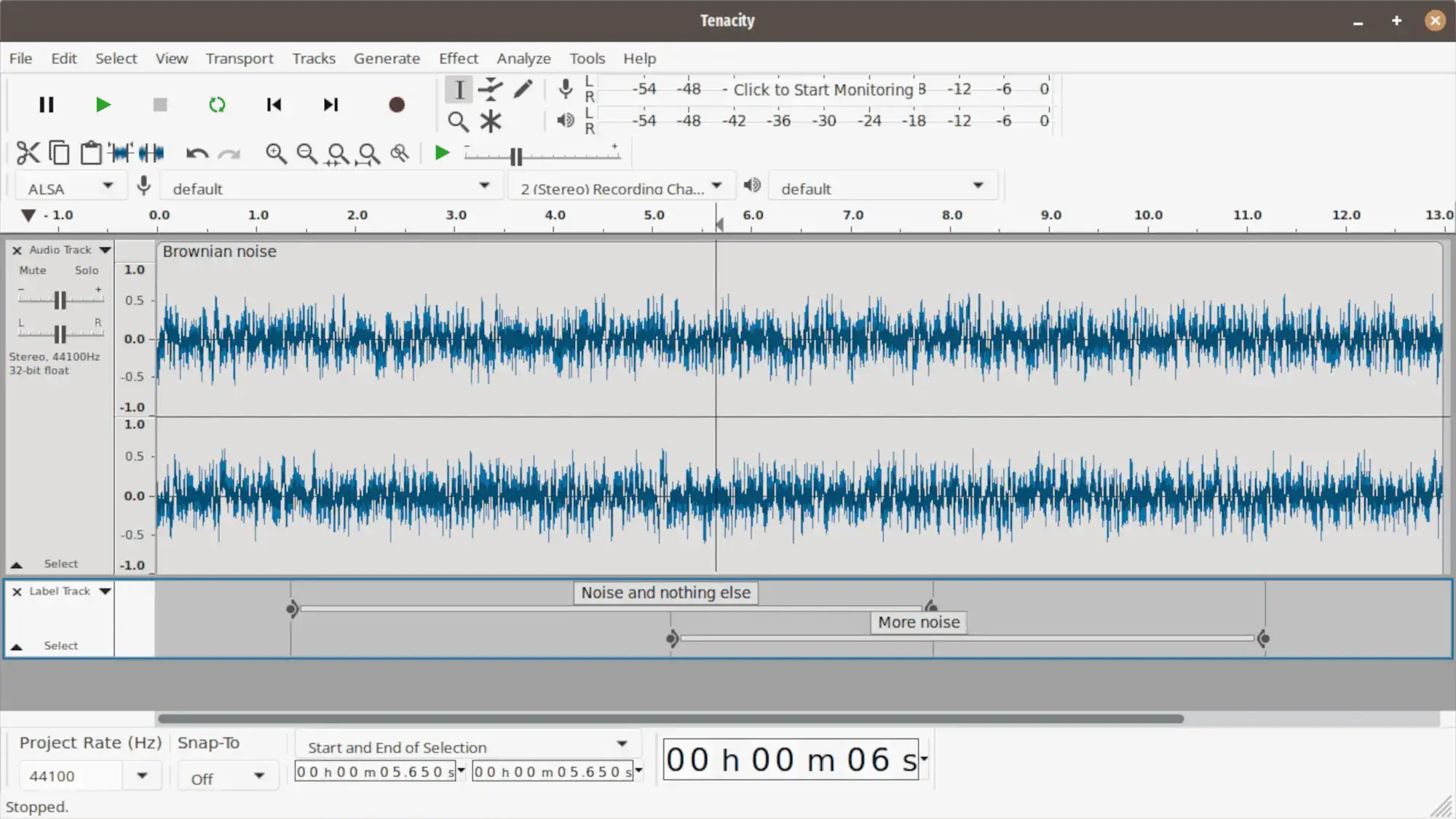
Why Choose It? Tenacity is based on Audacity and was created after Audacity’s 2021 ownership change raised data collection concerns. It keeps the familiar Audacity layout and core editing tools while removing data collection and background internet connections. If you already use Audacity, Tenacity will feel familiar.
- No data collection: No usage reporting or crash data upload
- Same feature set: Multi-track editing, noise reduction, effects, and export formats
- Effect add-ons: LADSPA, LV2, Nyquist, and VST effects all work
- Active development: Maintained independently on Codeberg
Quick Tip: Tenacity is available as a Flatpak, which keeps updates simple. Install it with flatpak install flathub org.tenacityaudio.Tenacity.
Install Command:
Best For: Fast, clean single-track audio editing with a modern layout
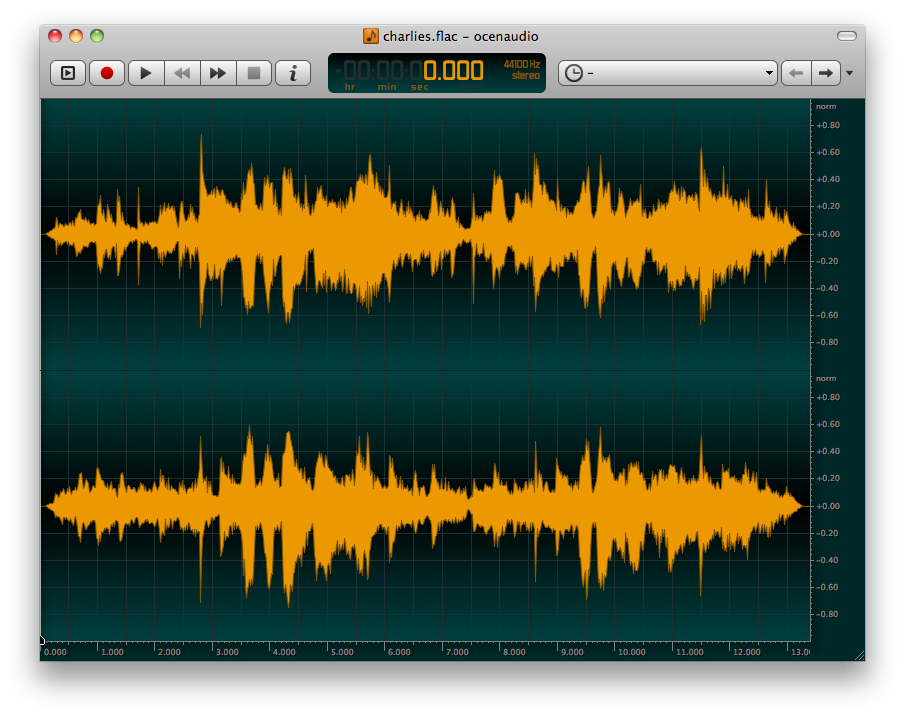
Why Choose It? Ocenaudio is built for speed. Where Audacity can require several menus, Ocenaudio lets you hear effects while you adjust them. The layout is clean and uncluttered, making it a fast tool for simple edits like trimming, fading, and evening out volume.
- Real-time preview: Hear effect changes instantly without applying and undoing
- VST effects: Load common audio effect add-ons directly
- Multi-selection: Select and edit multiple regions of a file at once
- Large file handling: Handles very large audio files without performance issues
Quick Tip: Use Ocenaudio’s live effect preview when you need to even out podcast volume. Move the slider and listen before saving the change. It saves a lot of trial and error.
Install Command:
sudo dpkg -i ocenaudio_ubuntu_amd64.deb
Best For: Users who want simple editing plus basic music production in one polished app
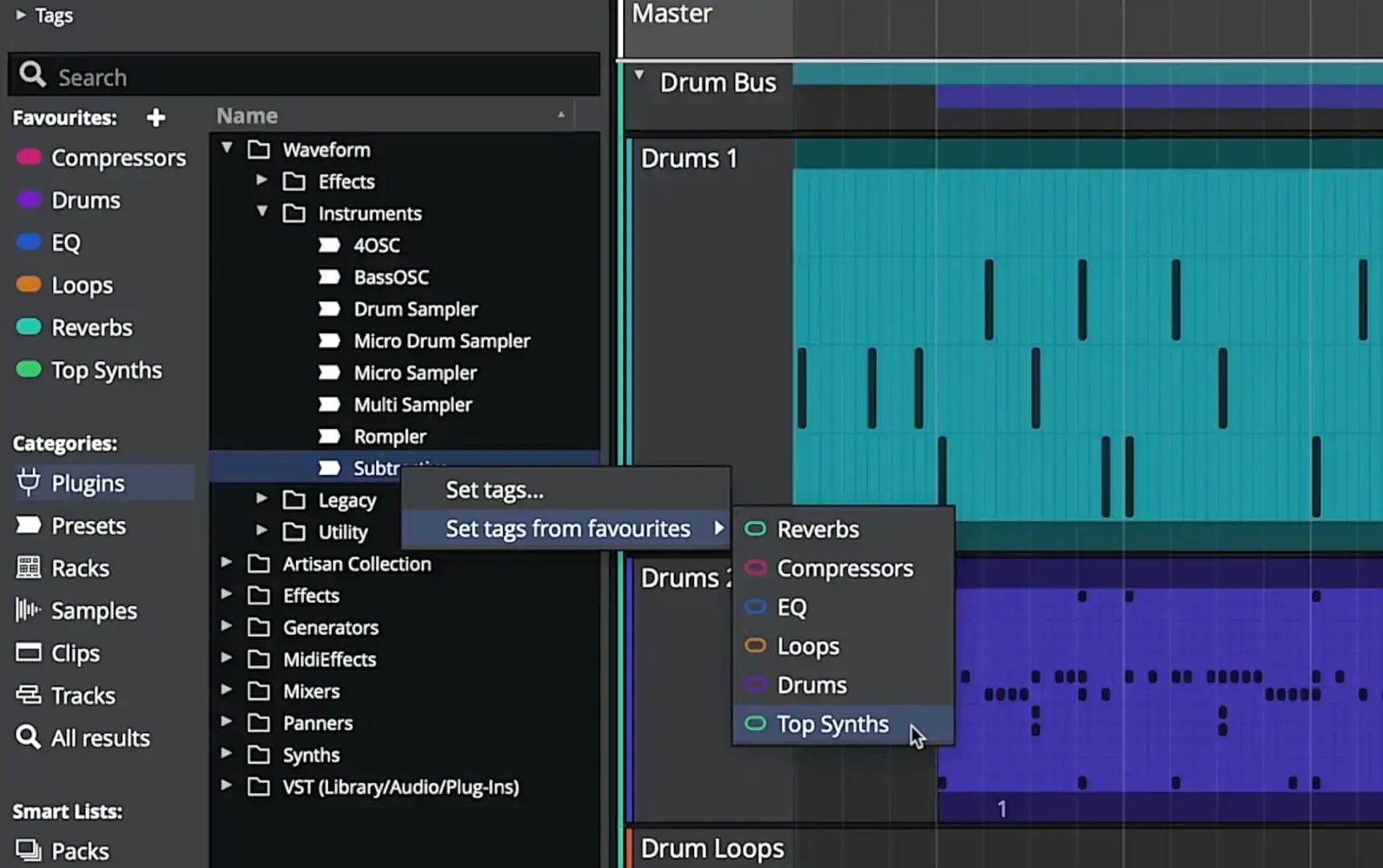
Why Choose It? Waveform Free is the free version of Tracktion Waveform, a commercial music production app with strong Linux support. The free version still includes unlimited tracks, MIDI note editing, and audio effect support. It is one of the most polished tools in this list and works well for users who find Audacity dated.
- Unlimited tracks: No artificial limits in the free tier
- MIDI notes: Record, edit, and play keyboard notes alongside audio tracks
- Effect add-ons: Supports VST, VST3, and AU effects
- Modern layout: Single-window design that feels current compared to older Linux audio apps
Quick Tip: Waveform Free requires registration on the Tracktion website, but registration is free and gives you access to bundled loop packs as well.
Install Command:
sudo dpkg -i WaveformFree_linux_64bit.deb
🎹 Music Production Apps
These apps are built for composing, arranging, mixing, and mastering. They handle recorded audio and MIDI notes together, so they are the right environment for full songs, electronic music, and detailed mixing work.
Best For: Professional recording, mixing, and mastering, especially if you want open source software
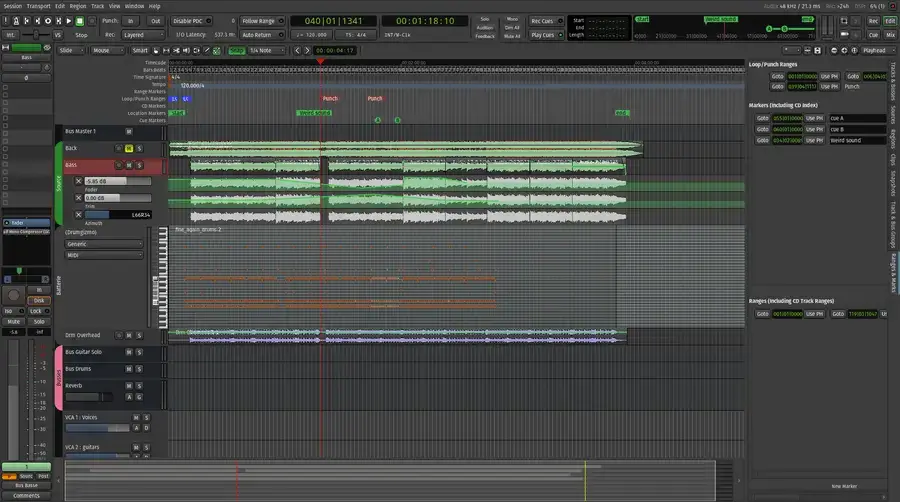
Why Choose It? Ardour is used by serious Linux audio users for recording and mixing. It keeps original recordings intact, has a full mixer, records MIDI notes, and loads common Linux audio effects such as LV2, VST, and VST3. It also connects to other Linux audio apps through JACK with very little delay.
- Safe editing: Edits can be reversed and do not overwrite the original recording
- Full mixer: Mix tracks, add effects, and automate volume changes over time
- JACK support: Connects audio between Ardour and other JACK-ready apps
- Effect add-ons: Supports LV2, VST, VST3, and LADSPA effects
Quick Tip: Ardour is free if you build it yourself, or available from ardour.org as a paid ready-made download. The fee supports the developers. Ubuntu Studio also includes Ardour and is tuned for lower audio delay.
Install Command:
Best For: Beginners producing electronic music, hip-hop, and beat-based tracks
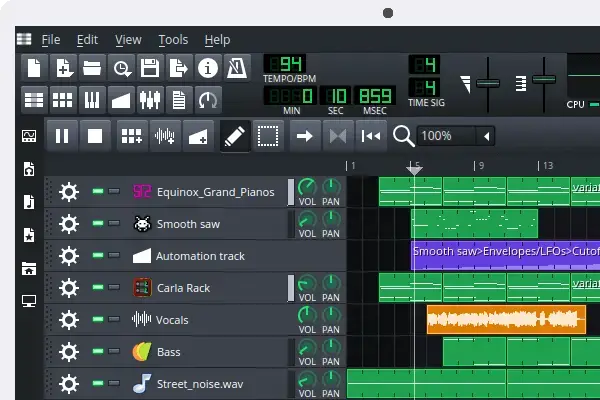
Why Choose It? LMMS makes music production easier to start. Its Beat+Bassline editor, built-in synths, and sample browser let a beginner make a complete track without installing extra effects or instruments. It records MIDI notes, has a song editor for arranging, and includes a useful instrument library.
- Beat+Bassline editor: Pattern-based drum and bass programming with a visual grid
- Built-in synths: TripleOscillator, ZynAddSubFX, and more included
- Effect add-ons: Loads LV2 and VST instruments and effects
- Song editor: Drag and arrange patterns into a full song timeline
Quick Tip: LMMS has a large community that shares free project files and presets. Search the LMMS forum for starter projects. Opening someone else’s project is one of the fastest ways to learn the app.
Install Command:
Best For: Users who want a polished paid studio app with native Linux support and a low price
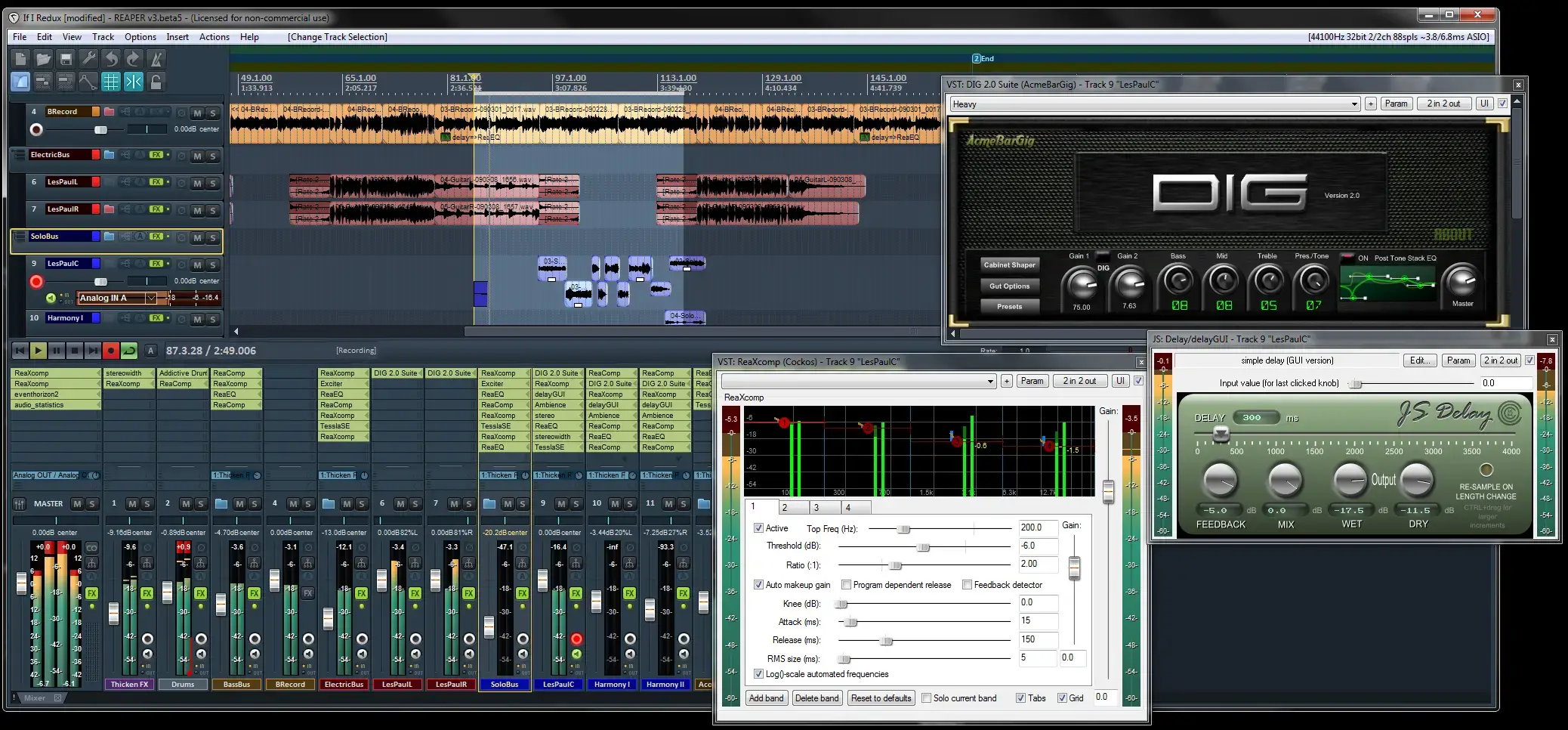
Why Choose It? Reaper is not open source, but it is one of the most Linux-friendly paid music production apps available. It runs on Ubuntu without Wine, has a 60-day free trial, and the discounted individual license costs far less than many paid studio apps. It is fast, flexible, and powerful for its size.
- Native Linux app: Runs without Wine or extra compatibility tools
- Lightweight: Fast startup, low RAM usage compared to many paid studio apps
- Scripting: Customizable via ReaScript (Lua, Python, EEL)
- Effect add-ons: Supports VST, VST3, LV2, and JS effects
Quick Tip: The discounted license applies if your annual gross revenue from Reaper use is under $20,000. For hobbyists and most independent creators, this license covers personal and commercial use at a fraction of the full price.
Install Command:
chmod +x reaper_linux_x86_64.tar.gz
tar -xzf reaper_linux_x86_64.tar.gz && cd reaper_linux_x86_64 && ./install-reaper.sh
Best For: Users who want MIDI notes and multi-track audio recording in a lighter Linux app
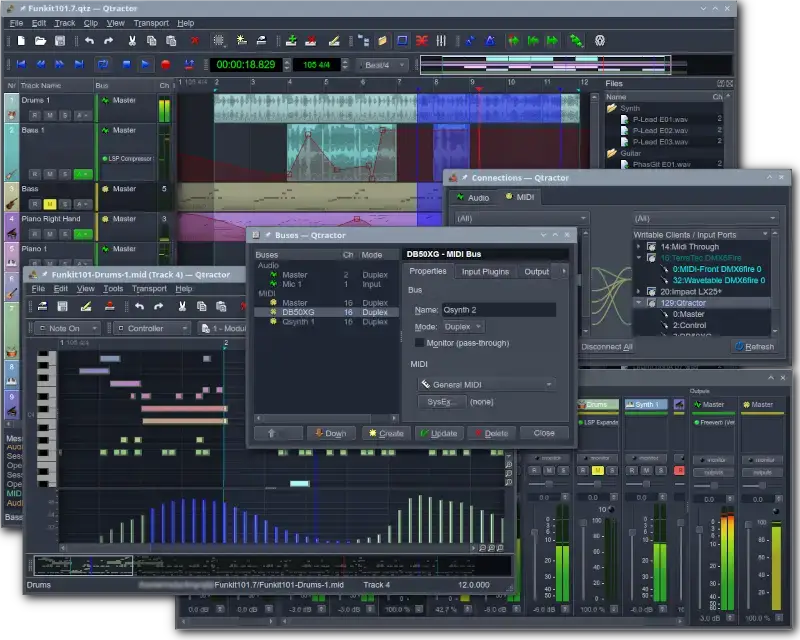
Why Choose It? Qtractor is a dependable music production app built specifically for Linux. It handles MIDI notes and recorded audio in the same timeline and works well with JACK. It is lighter than Ardour and simpler to understand, making it a good middle ground between Ardour and LMMS.
- MIDI + audio: Edit keyboard notes and recorded audio in one timeline
- JACK support: Routes cleanly with other JACK apps
- Effect add-ons: Supports LV2, LADSPA, VST, and DSSI effects
- Safe editing: Clip editing with undo history
Quick Tip: Qtractor pairs well with qjackctl, a small tool for managing JACK audio connections. Set up your connections once and save the session so they reload automatically.
Install Command:
Best For: Users who want a modern music production app that feels current
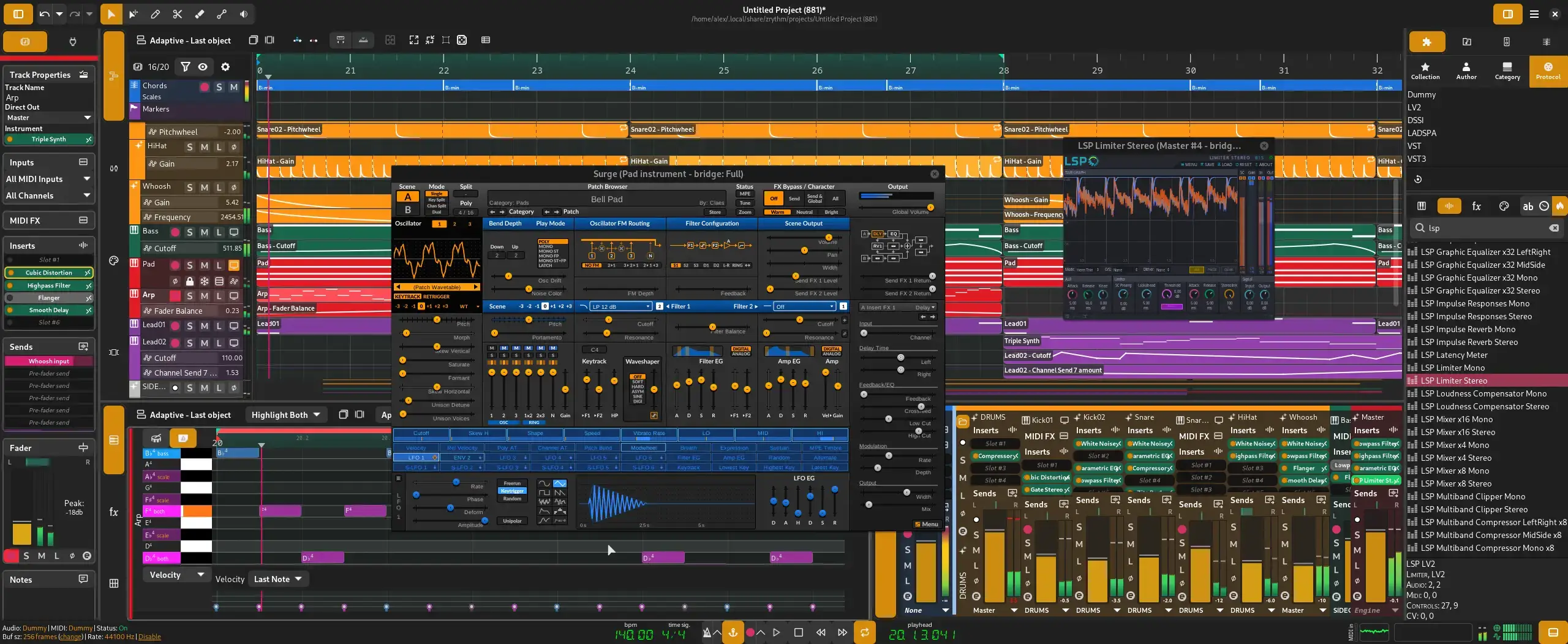
Why Choose It? Zrythm is actively developed and takes a fresh approach to music production on Linux. It helps with chords and scales, and its arrangement view feels closer to modern paid studio apps than many older Linux tools do. It is still growing, but it is already usable for real projects and improves with each release.
- Chord help: Highlights notes and chords that fit together
- Modern layout: Clean, dark design that feels current
- Effect add-ons: Supports LV2, VST3, and CLAP effects
- PipeWire and JACK: Works with both major Linux audio systems
Quick Tip: Zrythm builds are available via Flatpak for the most up-to-date release. The version in the Ubuntu apt repositories may lag behind. Use Flatpak if you want the latest features.
Install Command:
Ubuntu Studio is an official Ubuntu variant that includes Ardour, Hydrogen, Carla, and many other audio tools. It is tuned for lower audio delay, so you do not need to adjust JACK settings by hand. If you plan to do serious recording or music production, it is worth considering instead of standard Ubuntu. ubuntustudio.org
🆕 Specialist Tools
These applications do one thing well. Whether you need a drum machine, a notation editor, a DJ mixing desk, a tool for loading audio effects, or a live coding app, this section covers the strongest dedicated tools available on Ubuntu.
Best For: DJ mixing, live performance, and anyone who wants strong DJ software at no cost
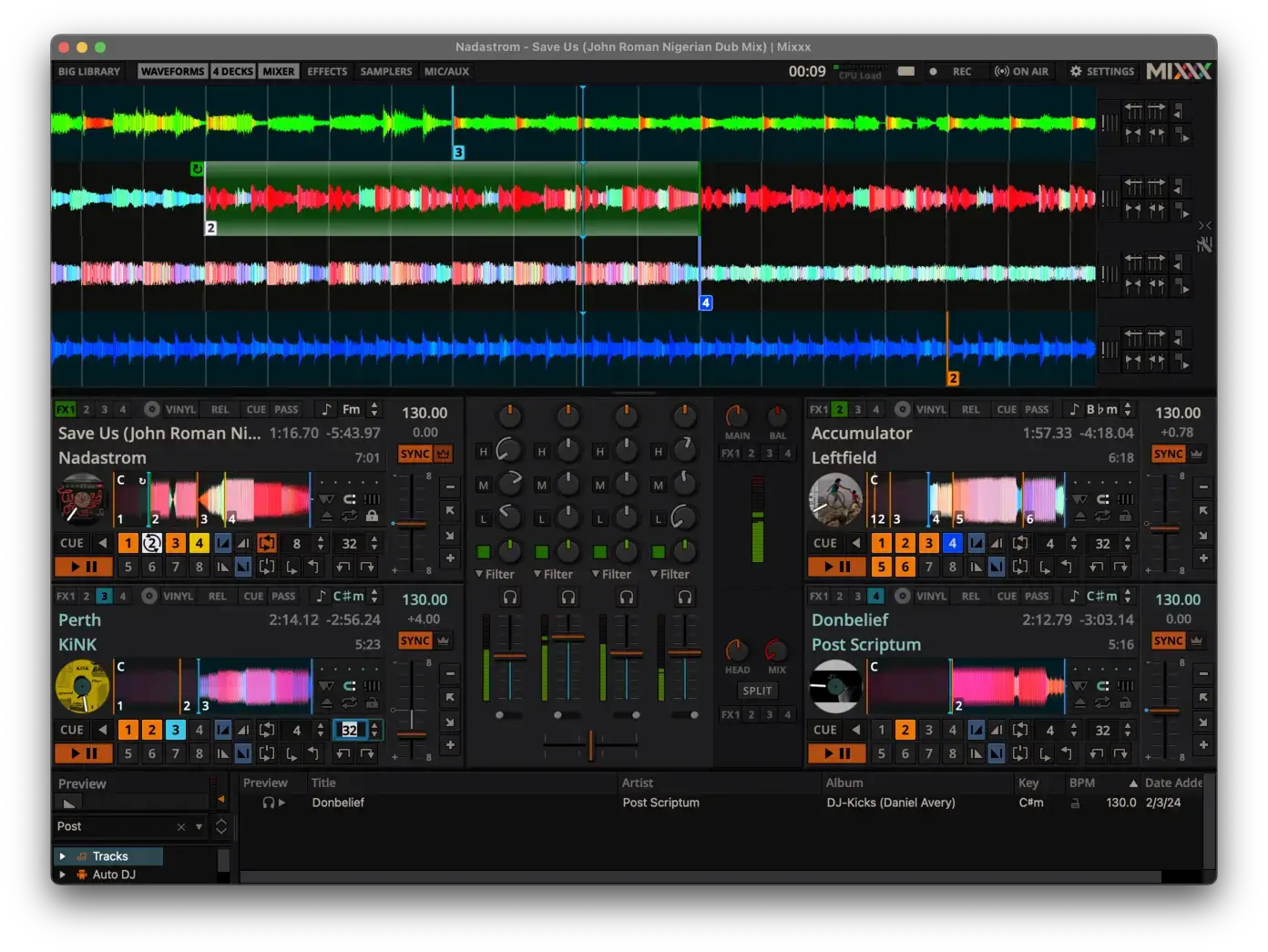
Why Choose It? Mixxx is one of the strongest open source DJ apps on any platform, not just Linux. It detects tempo and musical key, mixes up to four tracks, includes built-in effects, works with many hardware DJ controllers, and manages your music library. It can replace paid DJ software for many users.
- 4-deck mixing: Load and mix up to four tracks simultaneously
- Tempo and key detection: Finds track speed and musical key automatically
- Controller support: Maps to hundreds of hardware DJ controllers via MIDI/HID
- Effects unit: Built-in reverb, flanger, echo, and filter effects
Quick Tip: If you are using a hardware controller, check the Mixxx controller list before buying. Many popular Numark, Pioneer, and Hercules controllers already have ready-made setup files.
Install Command:
Best For: Writing, printing, and sharing sheet music; students, composers, and music teachers
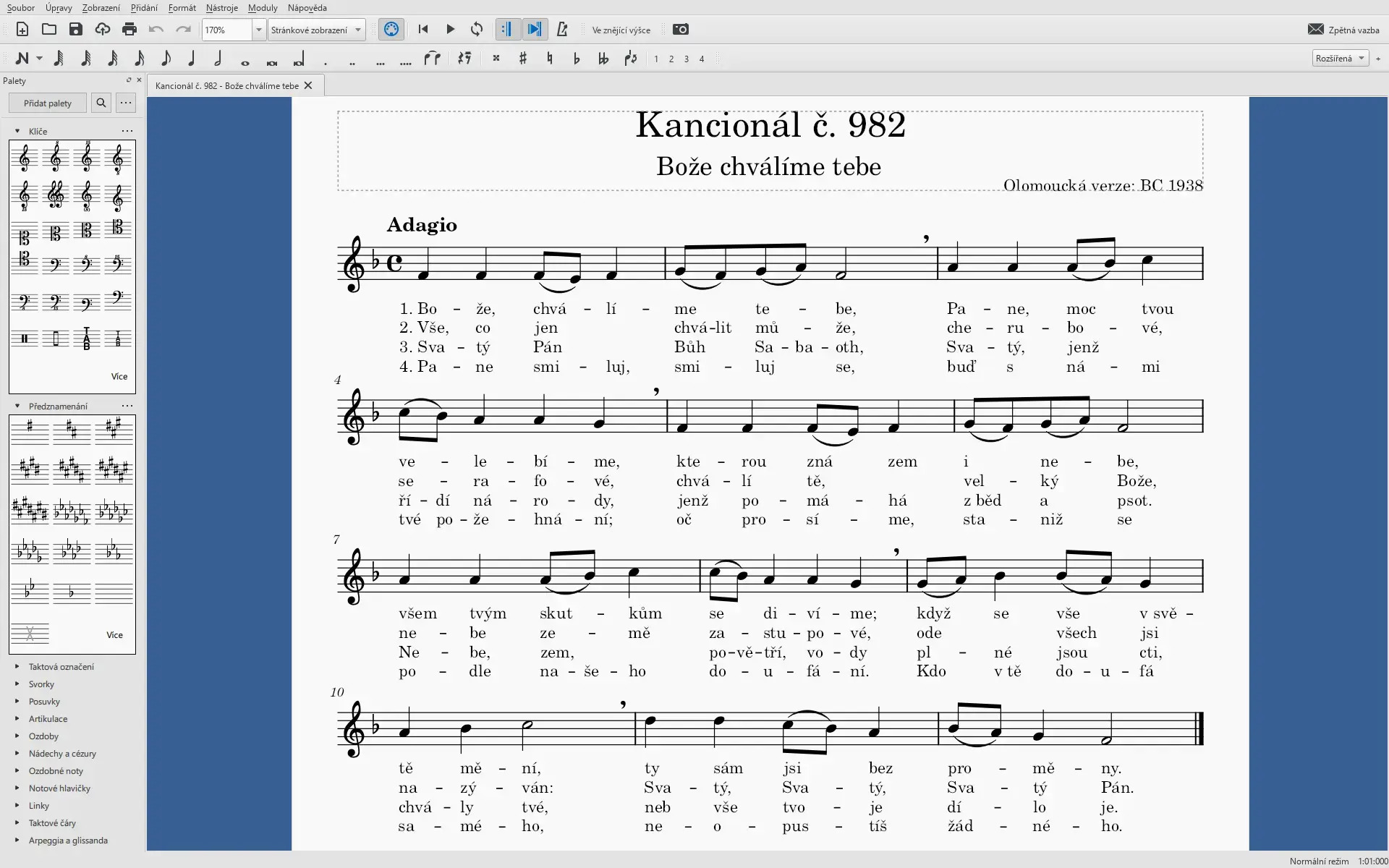
Why Choose It? MuseScore is the most complete free notation software available on Linux. It creates clean sheet music, supports note entry from a MIDI keyboard, and plays back scores with built-in sounds. You can export finished work as PDF, MIDI, or MusicXML.
- Score playback: Built-in sounds for previewing written music
- MIDI input: Enter notes by playing a connected MIDI keyboard
- Export formats: PDF, MusicXML, MIDI, and audio formats
- Add-ons: Extend the app with extra tools
Quick Tip: The Flatpak version of MuseScore is generally more up to date than the apt package. Use flatpak install flathub org.musescore.MuseScore to get the latest release.
Install Command:
Best For: Programming drum patterns, creating custom drum tracks, and live percussion performance
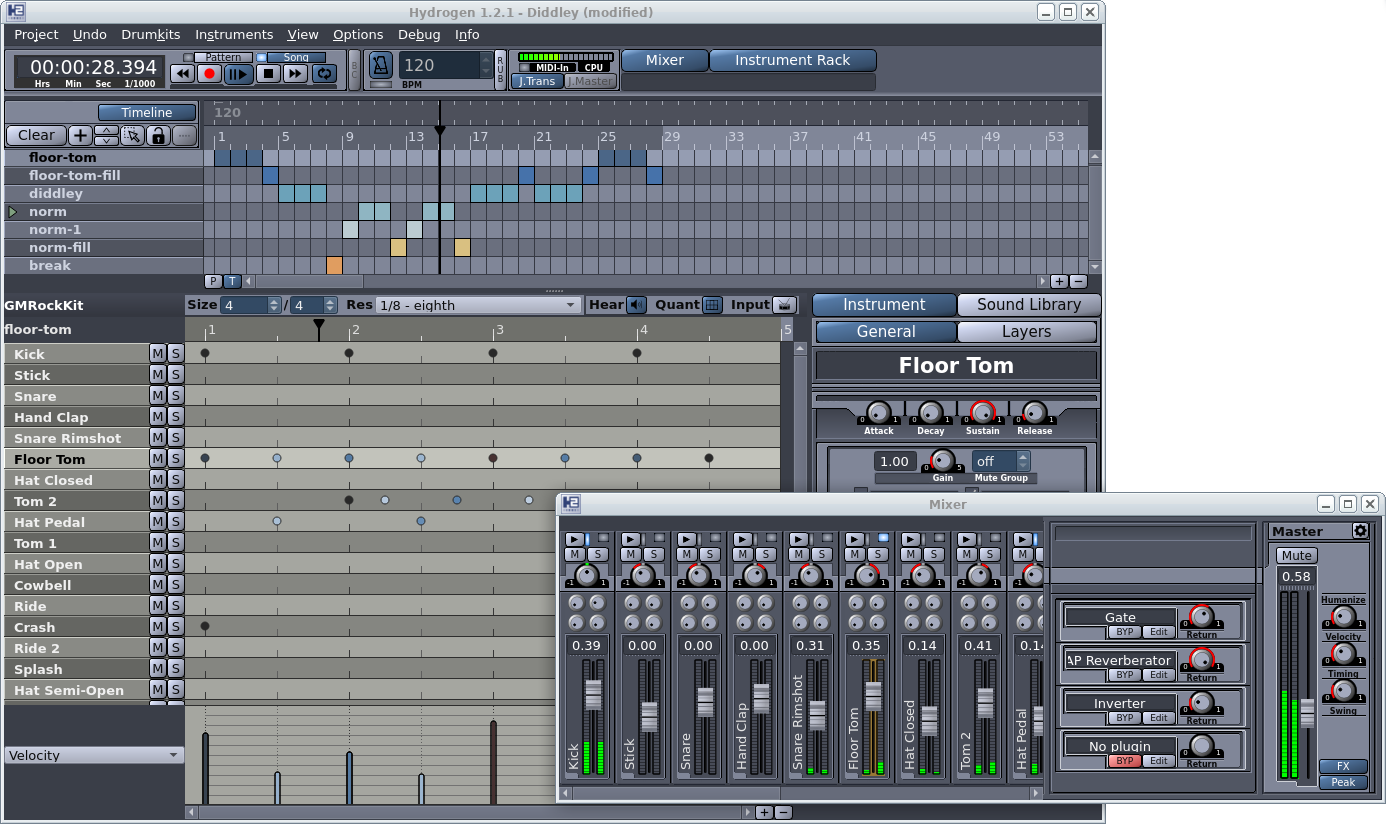
Why Choose It? Hydrogen has been the standard drum machine on Linux for years. It lets you build drum loops on a step grid and includes a built-in sound library. You can load custom drum kits, adjust how hard each hit plays, chain patterns into full songs, and sync it with other apps through JACK.
- Step grid: Visual 32-step pattern grid for building beats
- Custom kits: Load your own samples as a custom drum kit
- Natural feel: Vary hit strength and timing so drums sound less rigid
- JACK sync: Syncs tempo with other JACK applications
Quick Tip: The Hydrogen community maintains a large library of free drum kits. Visit hydrogen-music.org and download a few kits to expand beyond the defaults. The difference in sound quality is significant.
Install Command:
Best For: Composers who want MIDI recording and sheet music in one application
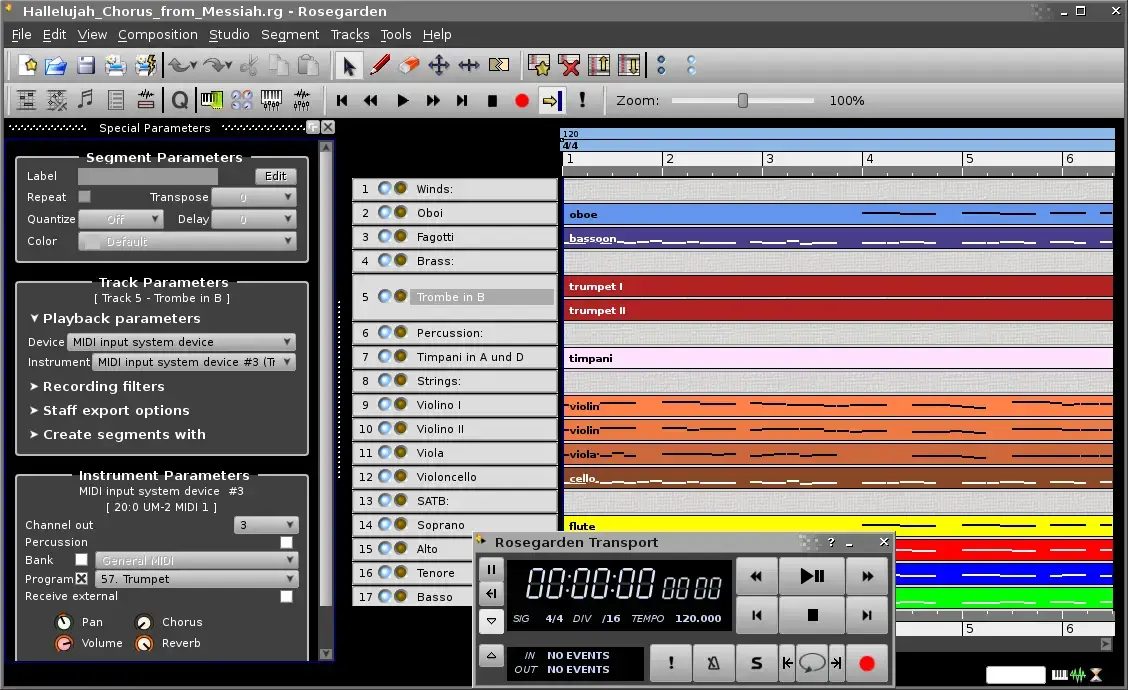
Why Choose It? Rosegarden combines MIDI recording with music notation. Unlike MuseScore, which starts with sheet music, Rosegarden lets you record MIDI notes and view them as both a piano roll and standard notation. If you compose on a MIDI keyboard and want printed parts from the same project, Rosegarden fits that job.
- Dual view: See and edit MIDI notes as piano roll or standard notation
- Score printing: Export notation to LilyPond for high-quality printed output
- MIDI editor: Full editing tools for recorded MIDI notes
- Instrument add-ons: Supports DSSI and LV2 software instruments
Quick Tip: For the highest quality printed scores, export from Rosegarden to LilyPond format. LilyPond produces engraving-quality output and is available in the Ubuntu repositories alongside Rosegarden.
Install Command:
Best For: Live coding performances, teaching programming through music, and making music with code
Why Choose It? Sonic Pi treats music as code. You write simple Ruby-based scripts to create and loop sounds, and the audio changes as you edit the code. It was originally built for the Raspberry Pi and music education, but it is also used for live coding performances.
- Live changes: Run and change code while audio plays
- Built-in tutorial: Shipped with a step-by-step learning guide
- Sample library: Hundreds of built-in synths and samples to use immediately
- MIDI output: Control external music hardware and software from code
Quick Tip: Start with the built-in tutorial inside Sonic Pi before looking elsewhere. It is one of the best-written pieces of software documentation on Linux and gets you to a working loop in under 10 minutes.
Install Command:
Best For: Loading audio effects and instruments outside of a full recording app
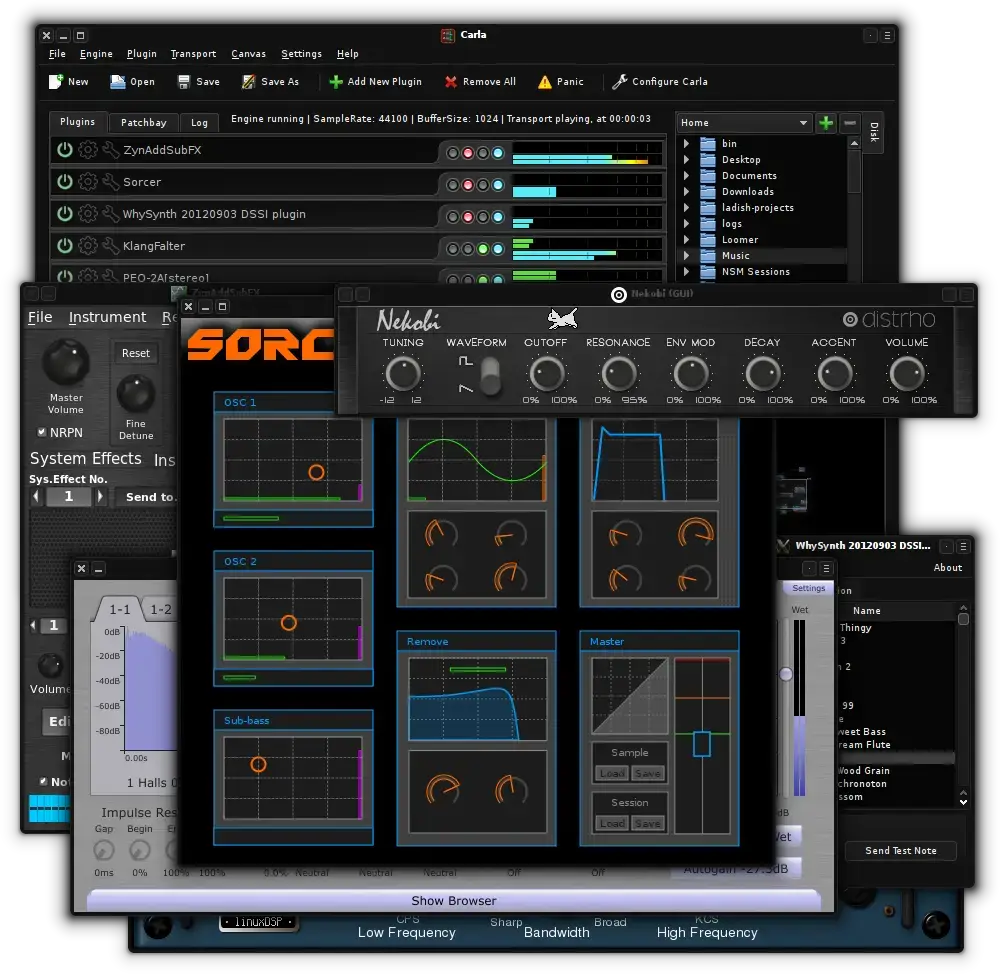
Why Choose It? Carla loads audio effects and software instruments as standalone tools. It supports LV2, VST, VST3, LADSPA, and DSSI add-ons and can connect audio between them with JACK or PipeWire. It does not record audio by itself. Its job is to connect tools, instruments, and effects in a flexible chain.
- Add-on formats: LV2, VST, VST3, LADSPA, DSSI, and SF2 sounds
- Patchbay view: Visual routing for audio and MIDI connections
- Rack view: Simple chain view for audio effects
- JACK and PipeWire: Works with both major Linux audio systems
Quick Tip: Use Carla to run a VST instrument on its own, then send its audio into Ardour or Qtractor. This keeps the instrument separate from your recording project and can make crashes less disruptive.
Install Command:
📊 All 15 Tools at a Glance
| Tool | Category | License | Install | Best For |
|---|---|---|---|---|
| Audacity | Audio Editor | GPL v2 | apt | Podcasting, cleanup |
| Tenacity | Audio Editor | GPL v2 | Flatpak | Privacy-first editing |
| Ocenaudio | Audio Editor | Freeware | .deb | Quick edits, real-time preview |
| Waveform Free | Audio Editor | Freeware | .deb | Modern layout, unlimited tracks |
| Ardour | Studio App | GPL v2 | apt | Professional recording, mixing |
| LMMS | Studio App | GPL v2 | apt | Electronic music, beginners |
| Reaper | Studio App | Paid closed source | Installer | Paid, lightweight |
| Qtractor | Studio App | GPL v2 | apt | MIDI notes, JACK setups |
| Zrythm | Studio App | AGPL v3 | Flatpak | Modern MIDI note writing |
| Mixxx | Specialist | GPL v2 | apt | DJ mixing, live sets |
| MuseScore | Specialist | GPL v2 | apt | Sheet music, notation |
| Hydrogen | Specialist | GPL v2 | apt | Drum programming |
| Rosegarden | Specialist | GPL v2 | apt | MIDI + notation combined |
| Sonic Pi | Specialist | MIT | apt | Live coding, education |
| Carla | Specialist | GPL v2 | apt | Effects, audio routing |
🎯 Which Tool Is Right for You?
Start with Audacity. It has noise reduction, silence trimming, and MP3 export built in. If data collection concerns you, use Tenacity instead.
LMMS is the right starting point. It is approachable, has built-in synths, and gets you to a finished beat without reading a manual first.
Ardour is the professional choice for Linux. If you want a commercial tool with native Linux support, Reaper is also worth the low cost.
Zrythm or Waveform Free. Both have cleaner layouts than many older Linux audio applications.
MuseScore for notation-first work. Rosegarden if you record MIDI and also need to produce notation from the same session.
Mixxx for DJ mixing with hardware controller support. Sonic Pi if your performance involves live coding.
Carla is the right tool. It routes audio and MIDI between effects, instruments, and applications without tying everything to one recording project.
❓ Frequently Asked Questions
What is the best audio editor for Ubuntu beginners?
Audacity is the easiest starting point. It handles recording, basic editing, and noise removal without requiring music production experience.
Is Audacity still good on Ubuntu?
Yes. Audacity is still maintained and is available through apt, Snap, and Flatpak. Tenacity is worth considering if you prefer a similar tool without data collection.
What is the best DAW for Linux music production?
DAW means digital audio workstation, which is a full app for recording, arranging, and mixing music. Ardour is the strongest studio-style option on Ubuntu. LMMS is easier for beginners making beats or electronic music. Zrythm is a newer option worth watching.
Can I run professional audio software on Ubuntu?
Yes. Ardour, Qtractor, Carla, and Reaper are used for serious audio work on Linux. Ubuntu Studio includes many of these tools and is tuned for lower audio delay, which helps when recording live instruments or vocals.
What is the best free notation software for Ubuntu?
MuseScore is the most widely used. It creates clean sheet music, plays scores back, and exports to PDF and MusicXML. Rosegarden is better if you record MIDI notes and also want sheet music from the same project.
Is there a drum machine app for Ubuntu?
Hydrogen is the standard choice. It lets you build drum loops on a step grid, use built-in drum sounds, load custom drum kits, and connect MIDI gear.
What Ubuntu audio tool is best for live performance?
Sonic Pi is built for live coding, where you change music with code while it plays. Mixxx is better for DJ sets with a hardware controller. Carla loads audio effects and instruments for live setups.
More Ubuntu software guides: Best Media Players for Ubuntu | Best Video Editors for Ubuntu | Best Software for Ubuntu | Best Browsers for Ubuntu | Best Music Players for Ubuntu